
News Center
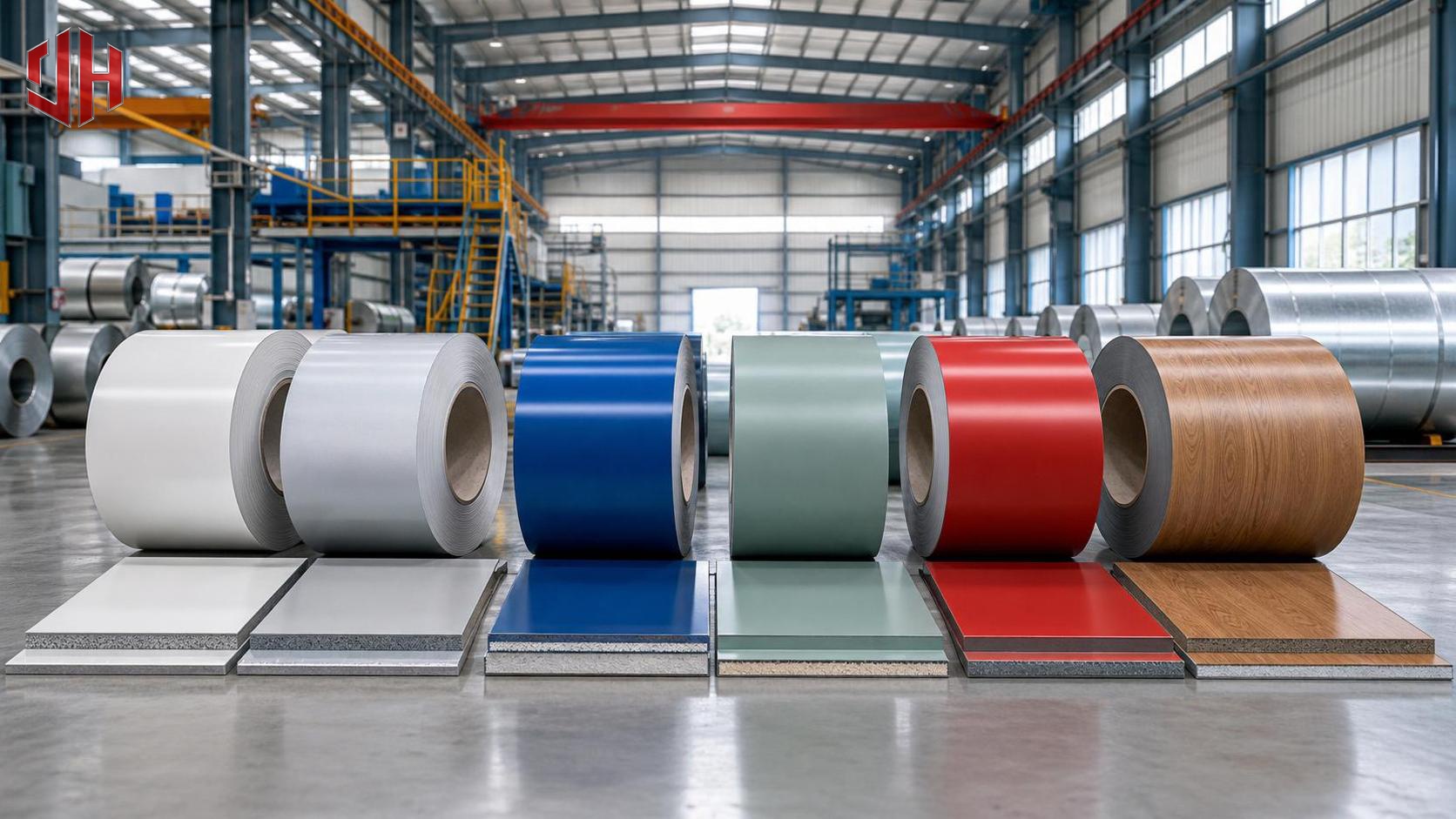
The debate around Prepainted Steel and color coated steel often starts with terminology, but service life is shaped by much deeper variables. In steel selection for roofing, cladding, appliances, and fabrication, durability depends on how the coating system, substrate, process control, and operating environment work together. A coil may look similar at delivery, yet perform very differently after years of UV exposure, humidity, salt, chemicals, or repeated forming.
That is why this topic matters across today’s steel trade. A shorter-than-expected lifespan affects maintenance cycles, replacement cost, appearance stability, and even structural risk at exposed edges and fastener points. For export supply chains, where materials must meet varied climate conditions and project standards, a more precise understanding of Prepainted Steel helps avoid decisions based only on color, gloss, or initial price.
Where the naming overlap creates confusion
In many markets, Prepainted Steel and color coated steel are used almost interchangeably. Both usually refer to steel coil that has been cleaned, treated, coated, and cured before fabrication.
The practical difference is not always in the label. It is often in the coating recipe, the galvanized or galvalume substrate, the film thickness, and the quality consistency of the production line.
So the real question is not which term sounds better. The better question is what exact material system is being supplied, and how that system will age in service.
Service life begins with the substrate
A topcoat cannot compensate for a weak base steel. When evaluating Prepainted Steel, substrate choice is one of the first points to verify.
Galvanized and galvalume do not age the same way
Galvanized steel relies on a zinc coating for sacrificial protection. It performs well in many general building applications, especially where atmospheric exposure is moderate.
Galvalume, with aluminum-zinc alloy coating, usually offers stronger long-term corrosion resistance in many outdoor conditions. It is often preferred for roofing and wall systems exposed to heat and weather cycling.
However, environment still matters. Coastal salt, livestock buildings, industrial fumes, and trapped moisture can change performance expectations quickly.
Coating mass has direct influence
Two coils may share the same color and paint family, yet carry very different metallic coating weights. That difference can strongly affect red rust onset at cut edges and scratched areas.
For long service life, metallic coating mass should be reviewed together with paint thickness. Looking at only one side of the system creates a false comparison.
The coating structure matters more than the color
When people describe color coated steel, they often focus on appearance. For service life, color is secondary. The coating stack is what deserves attention.
A typical system has several layers
Prepainted Steel usually includes pretreatment, primer, topcoat, and a back coat. Each layer has a separate job, from adhesion to corrosion resistance to weather protection.
If pretreatment is poor, paint adhesion may fail early. If primer selection is weak, underfilm corrosion can spread faster. If topcoat chemistry is mismatched, chalking and fading appear sooner.
Paint type changes weathering behavior
This is why a statement like “both are color coated” says very little. The chemistry behind the coating is often the real service-life differentiator.
Processing quality can extend or shorten lifespan
Even a well-designed Prepainted Steel product can fail early if coating application is inconsistent. Production discipline matters from the first cleaning stage to final curing.
Important variables include surface cleanliness, chemical pretreatment control, wet film uniformity, oven temperature profile, curing adequacy, and coil handling after coating.
In export business, this becomes more important because buyers may not inspect the coating line directly. They rely on documented standards, testing records, and supplier traceability.
Jiuhe Steel, based in Jinan, Shandong, works within a strong regional industrial supply base and emphasizes quality control across sourcing and export procedures. In practical terms, that matters because durability claims are only credible when upstream consistency is controlled.
The environment decides how fast weaknesses appear
Service life is never determined by the coating alone. End-use conditions decide whether a coating system ages slowly or reaches failure points much earlier than expected.
Key exposure factors to review
- High UV exposure and heat cycling
- Marine salt and chloride deposition
- Industrial sulfur, solvent, or alkaline contamination
- Condensation on enclosed or poorly ventilated surfaces
- Frequent wet-dry cycles at joints and laps
- Contact with incompatible sealants or dissimilar metals
A standard polyester system may perform well inland, but struggle near the coast. A heavier substrate and more durable topcoat may be justified even if the visual requirement is simple.
That is also why service-life estimates should be linked to project location and design details, not just to a generic product brochure.
Forming, installation, and design details are often overlooked
Many durability issues begin after the coil leaves the coating line. Formability, installation methods, and drainage design can all affect how Prepainted Steel performs over time.
Mechanical damage is a common trigger
Tight bends, rough roll forming, tool marks, and transport scratches can break the protective system. Corrosion then starts at local damage points, especially where moisture remains trapped.
Edge and fastener areas need special attention
Cut edges, punched holes, and fastener seats are natural weak zones. If these details are exposed to standing water or aggressive atmosphere, failure may appear there first.
Good drainage, suitable fastener selection, proper sealing, and controlled forming radius can do more for real lifespan than a cosmetic paint upgrade alone.
How to compare options in a more useful way
A practical comparison should move beyond the broad label of color coated steel. It helps to review a defined set of technical points before judging service life.
This framework makes comparisons more realistic. It also helps separate decorative suitability from true long-term durability.
What deserves closer review before final selection
For projects where service life is critical, several checks are worth doing early rather than after procurement.
- Match the coating system to the actual atmosphere, not an assumed average climate.
- Ask for substrate and coating specifications in measurable terms.
- Review bend performance if the part will be heavily formed.
- Check whether cut-edge exposure is high in the final design.
- Confirm packaging and shipping controls for exported Prepainted Steel coils or sheets.
- Use supplier documentation to verify consistency across batches.
These checks are especially useful when sourcing across regions. A supplier with stable upstream coordination and disciplined export handling can reduce avoidable variation between nominally similar products.
A more reliable way to think about service life
Prepainted Steel does not achieve long life because it carries a certain name. It performs well when substrate choice, metallic coating, paint chemistry, process quality, fabrication, and environment are aligned.
That is the more useful distinction behind the phrase “Prepainted Steel vs color coated steel.” In many cases, the terms overlap, but performance does not.
The next step is to build a clear comparison sheet around exposure conditions, coating structure, test data, and design details. With that approach, material selection becomes less about labels and more about verified service-life fit.
Navigation
Message
Please give us a message