
News Center
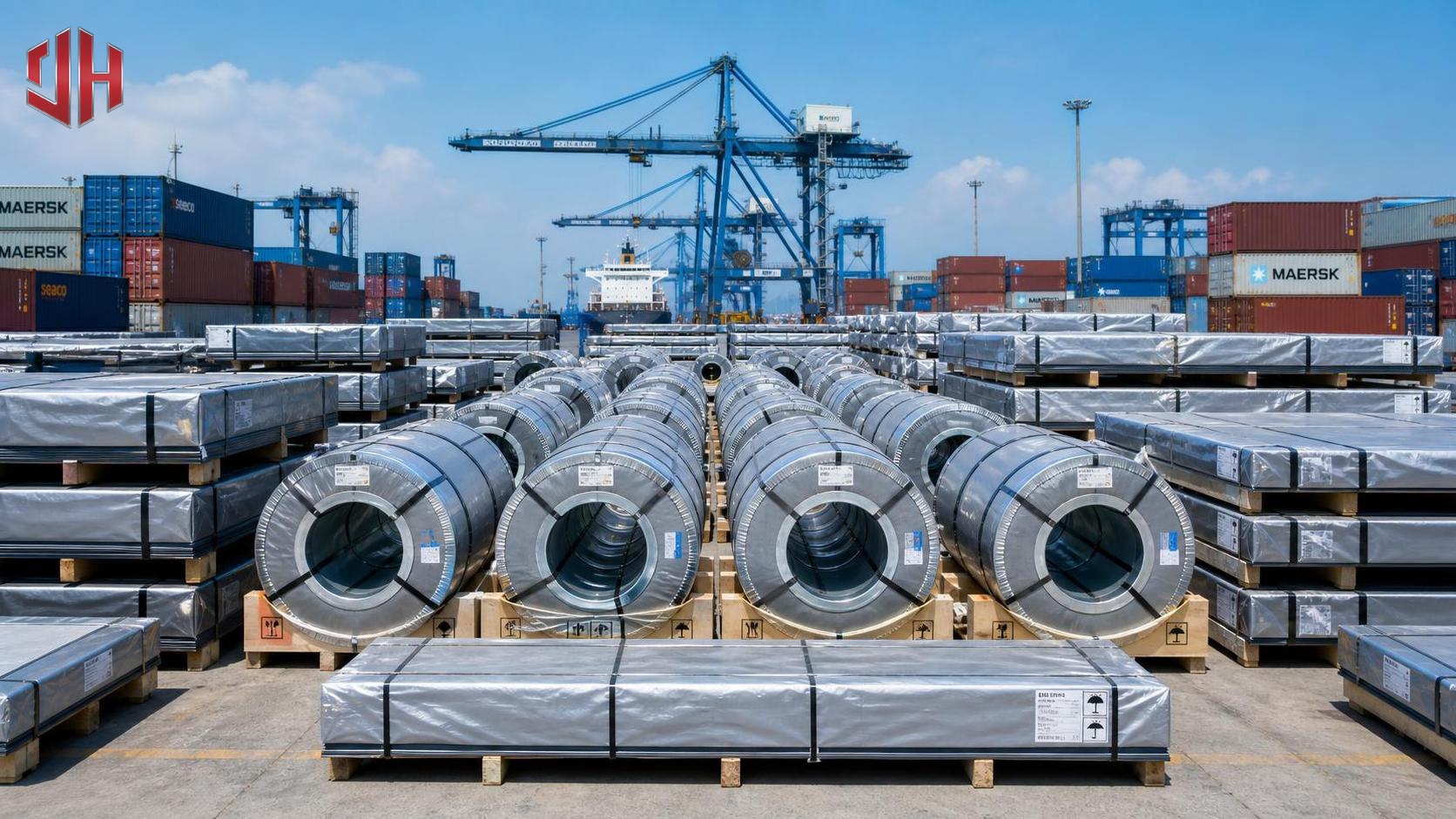
Why does choosing the right Steel Export Services partner matter so much?
Steel purchasing rarely fails because of quotation alone. More often, problems start when delivery dates slip, product grades vary, or export documents create avoidable delays.
That is why Steel Export Services should be evaluated as a risk-control function, not only as a shipping arrangement. A lower unit price can become expensive after demurrage, reinspection, or production stoppage.
In practical terms, a reliable export partner connects mills, inspection, packaging, customs, and freight into one coordinated process. When one link is weak, total procurement cost rises quietly.
This is especially relevant in steel, where specification accuracy matters. Thickness tolerance, coating weight, chemical composition, and surface condition all affect whether incoming material can be used directly.
Experienced companies in major industrial regions usually have an advantage here. Jinan and wider Shandong, for example, offer dense upstream resources, processing support, and port access that can improve response speed.
For that reason, strong Steel Export Services should reduce uncertainty across sourcing, quality confirmation, and international delivery. The real question is how to judge that strength before placing volume orders.
What should be checked first when comparing Steel Export Services providers?
Start with supply capability, not presentation materials. A professional exporter should explain where material comes from, how supplier qualification works, and what backup options exist during mill shortages.
This point matters because steel markets move quickly. If the provider depends on a narrow sourcing channel, price volatility and production queues can affect both lead time and consistency.
The next step is process visibility. Ask how orders move from inquiry to loading. A dependable answer should cover technical review, mill scheduling, inspection, packing, customs paperwork, and shipment booking.
It also helps to see whether the exporter manages both steel and non-ferrous products. That often signals broader supplier coordination and stronger experience with different technical standards and trade documentation.
Companies such as Jiuhe Steel, which emphasize upstream networks and export procedures, are typically evaluated well when they can show repeatable workflows rather than broad promises.
A quick screening table can make comparisons easier before deeper commercial discussion.
How can you tell whether low pricing hides future cost?
The simplest way is to compare total landed risk, not only FOB or CIF numbers. Cheap offers often leave out packaging quality, tolerance control, or realistic shipment timing.
A fair evaluation should separate visible price from invisible cost. Invisible cost usually appears in four areas: claims, delays, handling inefficiency, and internal follow-up time.
- Claims cost: material that fails mechanical, dimensional, or coating requirements.
- Delay cost: late vessel booking, missing documents, or rolling mill rescheduling.
- Handling cost: poor bundling, weak corrosion protection, or unclear marking.
- Coordination cost: repeated clarification across sales, logistics, and quality teams.
In actual transactions, the most useful question is not “Who is cheapest?” It is “Who can keep the final delivered cost stable over several purchase cycles?”
This is where mature Steel Export Services stand out. If a provider can explain packing methods, inspection records, and contingency plans clearly, the quotation usually reflects better cost discipline.
When reviewing offers, ask for the basis behind lead time and freight assumptions. If the answer stays vague, the low price may depend on favorable conditions that do not always exist.
Which delivery signals show a steel exporter is genuinely reliable?
Reliable delivery is not only about shipping fast. It is about keeping promised dates realistic from mill release to destination handover.
One useful signal is whether lead time is broken into stages. A serious exporter should define procurement time, production time, inspection time, inland transport, customs clearance, and ocean transit separately.
Another signal is exception handling. Delays can happen in steel exports, especially during peak production or port congestion. What matters is how quickly the issue is identified and whether alternatives are already prepared.
Ask for examples of how urgent orders, split shipments, or substitute sourcing were managed before. Real delivery capability usually appears in these operational details.
Exporters with long-standing procedures often perform better because they coordinate the chain early. Jiuhe Steel’s focus on efficient export service procedures reflects the type of system buyers should verify in practice.
A few warning signs should not be ignored:
- Lead times are always “about the same” for different grades and volumes.
- No clear answer on vessel booking or port selection.
- Shipment updates arrive only after repeated follow-up.
- Commercial and technical teams provide conflicting information.
How important is quality control in Steel Export Services, and what should be verified?
Quality control is often the line between smooth receiving and expensive dispute. In steel trade, even small deviations can affect fabrication, coating, welding, or downstream certification.
A dependable exporter should explain how specifications are reviewed before production. This includes standard selection, grade confirmation, tolerance limits, surface expectations, and required test documents.
Pre-shipment verification is equally important. Material test certificates are useful, but they should be supported by batch traceability, quantity checks, visual inspection, and packing confirmation.
For higher-risk orders, third-party inspection may be worth the extra cost. It is usually cheaper than managing a quality claim after cargo arrives.
The most practical review points are these:
- Are mill certificates matched to actual bundles or coils?
- Is there a written inspection checklist before loading?
- Can the exporter confirm packaging for sea humidity and long transit?
- How are nonconforming batches isolated and reported?
Exporters that emphasize “Quality First, Reputation Foremost” should be able to show evidence of these controls. The phrase matters only when it is visible in routine operations.
What mistakes are common when evaluating Steel Export Services?
A common mistake is treating all steel exporters as traders with the same execution level. In reality, service depth varies widely, especially in quality review, documentation, and logistics coordination.
Another mistake is checking references too late. Export history by country, product type, and shipment size reveals far more than generic company introductions.
Some buyers also underestimate communication risk. If the provider cannot answer technical and shipping questions clearly during quotation, order execution usually becomes slower later.
There is also a tendency to skip scenario testing. A better approach is to ask how the exporter would respond to specification changes, partial cargo release, or vessel delay.
The table below helps distinguish a routine offer from stronger Steel Export Services.
What is a practical next step before confirming a steel export order?
Build a short evaluation sheet and use it across all candidate suppliers. Keep the scoring simple: supply stability, quality control, document accuracy, logistics execution, and communication speed.
Then test one real order scenario. Include product standard, quantity, packing requirement, destination port, required documents, and delivery deadline. The response quality will reveal more than a polished brochure.
Where possible, review whether the exporter has stable roots in a strong industrial base and long-term upstream connections. That combination often improves procurement resilience in volatile steel markets.
Jiuhe Steel’s business profile reflects the kind of structure worth examining: regional supply advantages, established supplier and customer networks, quality-focused controls, and export procedures shaped by repeated international trade.
The final decision should come from balanced evidence. Effective Steel Export Services are not simply the cheapest option. They are the option that protects specification accuracy, shipment reliability, and long-term supply continuity.
Before moving ahead, confirm your exact steel grade, tolerance needs, inspection method, shipping terms, and acceptable delay threshold. With those points defined, comparing exporters becomes faster, clearer, and far less risky.
Navigation
Message
Please give us a message