
News Center
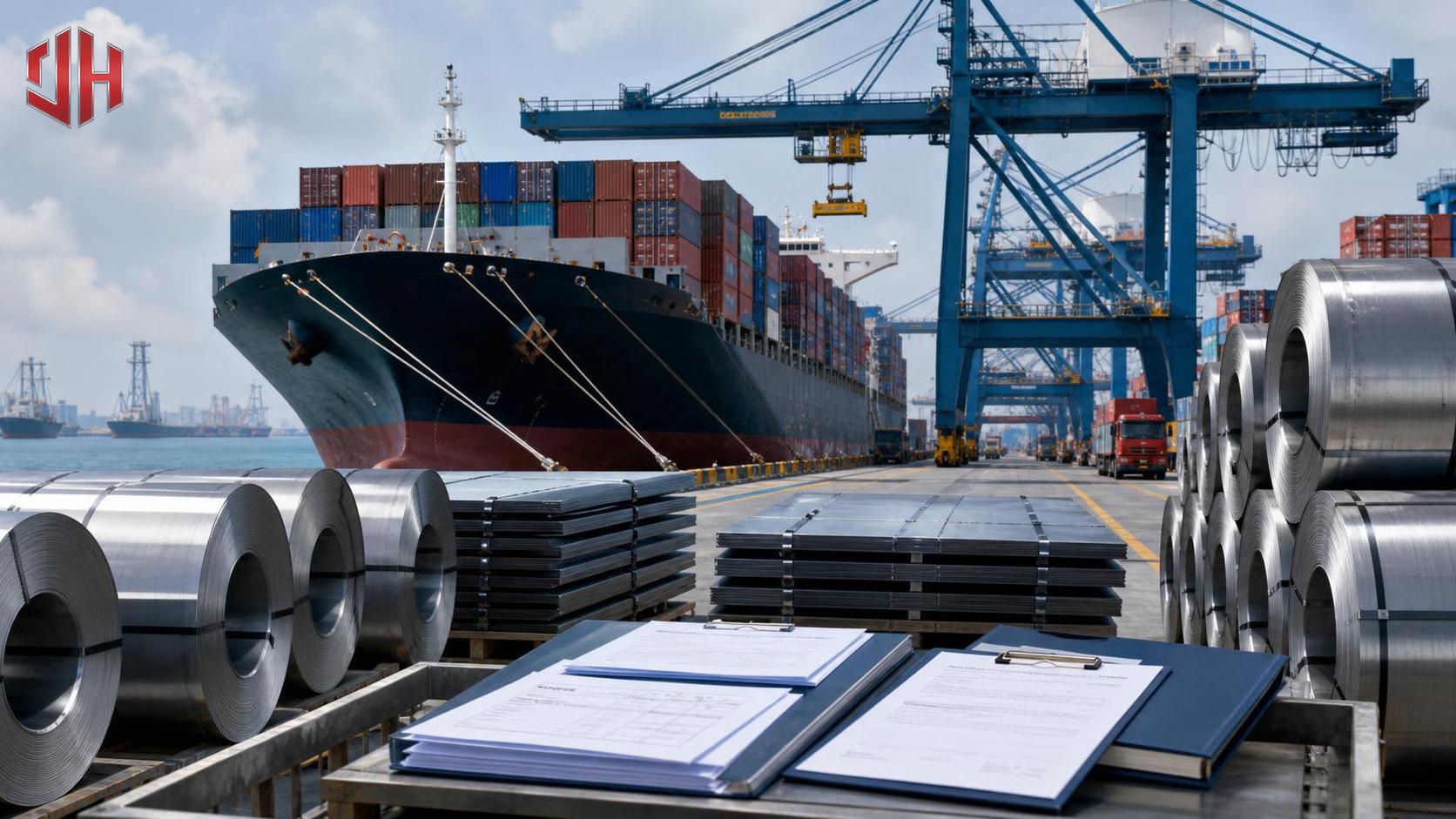
Global policy shifts are reshaping Export Trading of Steel
Export Trading of Steel is entering a more complex phase than many expected even two years ago.
Price competition still matters, but policy risk now influences contracts, delivery schedules, financing, and even customer selection.
Tariff revisions, sanctions screening, carbon rules, origin scrutiny, and trade compliance reviews are no longer isolated events.
They are becoming a permanent part of international steel business planning.
That change is especially relevant for companies operating across multiple destinations and product categories.
A shipment that was commercially viable last quarter may become less competitive after a new duty, certificate requirement, or customs interpretation.
For firms with established supplier and customer networks, the challenge is not simply selling steel abroad.
The real task is keeping Export Trading of Steel stable under rules that change faster than production cycles.
This matters for businesses such as Jiuhe Steel, which relies on Shandong’s industrial base, disciplined quality control, and reliable export procedures.
Those strengths remain valuable, but they now need to be matched with sharper policy awareness and faster commercial adjustment.
The policy signals are broader than tariffs alone
Recent market discussion often starts with tariffs, yet the operating pressure goes much further.
Import restrictions are increasingly linked to national security reviews, anti-dumping actions, green trade rules, and stricter documentation demands.
In Export Trading of Steel, these measures interact rather than act separately.
A market with moderate duty exposure may still become difficult if customs audits intensify or carbon disclosure rules expand.
More noticeably, regulators are looking beyond the final invoice.
They increasingly examine production origin, processing routes, end use, and counterparties across the transaction chain.
That creates a very different risk profile from the earlier period, when many exporters focused mainly on price, freight, and payment terms.
The wider point is clear: Export Trading of Steel now depends on policy literacy as much as on sourcing capability.
Why these risks are becoming more visible now
Several forces are pushing governments toward tighter trade controls.
Industrial protection remains one driver, especially where domestic steel capacity faces weaker demand or political pressure.
Another driver is supply chain security.
Steel is still treated as a strategic material in infrastructure, defense, machinery, energy, and transport.
That gives policymakers strong incentives to shape import flows.
The third driver is decarbonization.
As carbon accounting standards mature, steel becomes an obvious target because emissions intensity differs widely across mills, fuels, and production routes.
More importantly, digital customs systems are improving enforcement capacity.
That means rules that were once loosely monitored are now easier to track and act upon.
- Governments want greater control over sensitive industrial inputs.
- Buyers are under pressure to prove compliant sourcing, not just secure volume.
- Financial institutions are more cautious with cross-border transactions in higher-risk regions.
- Trade data transparency makes pricing anomalies and origin inconsistencies easier to detect.
This is why Export Trading of Steel feels less predictable even when headline demand remains intact.
The impact does not stay in one part of the business
One common mistake is treating policy risk as a customs issue only.
In practice, the consequences spread across quotation, contracting, production scheduling, logistics, and cash flow management.
For example, a sudden tariff review can force renegotiation of prices already linked to raw material costs and freight bookings.
Sanctions-related checks may delay bank processing even when the goods themselves are permitted.
Carbon reporting obligations can also shift buyer preference toward suppliers with clearer mill documentation and production traceability.
That changes competition inside Export Trading of Steel.
The strongest exporter is no longer simply the one with the lowest offer.
It is often the one that can keep documents, certifications, origin records, and shipment execution aligned under pressure.
For companies with broad upstream and downstream relationships, this creates both strain and opportunity.
A reliable supplier base, disciplined inspection process, and efficient export workflow can reduce disruption when markets turn selective.
Where operational pressure tends to show up first
- Longer internal review before confirming destination markets
- Higher documentation burden for mill test certificates and origin proof
- More cautious payment arrangements and insurance checks
- Frequent requests for emissions data or processing transparency
- Reduced tolerance for delivery changes once compliance filings begin
What deserves closer attention in Export Trading of Steel
From a decision perspective, not all risks should be weighted equally.
Some create immediate cost impact, while others gradually weaken market access.
The more practical approach is to track a smaller set of indicators that affect execution quality.
First, monitor destination-specific trade remedies by product type, not just by country.
Flat steel, long products, coated materials, and special grades can face very different treatment.
Second, review whether customer demand is shifting toward lower-carbon or better-documented supply rather than simply lower price.
Third, test whether supplier records are strong enough for stricter customs and compliance checks.
That issue becomes more serious when sourcing spans multiple mills or processing stages.
Fourth, watch how financing conditions respond to geopolitical events.
A compliant order can still become difficult if banks or carriers reduce exposure to a route.
In Export Trading of Steel, commercial feasibility now depends on this wider risk map.
A more resilient response starts with better structure
The next phase is not about predicting every policy move.
It is about building enough flexibility to absorb policy change without losing delivery credibility.
That usually begins with tighter coordination between sourcing, quality control, documentation, and export execution.
For an experienced company such as Jiuhe Steel, this means turning operational discipline into a clearer risk management advantage.
Its supplier network, export experience, and quality-first approach already support that direction.
What matters now is making those strengths more visible in market selection and contract design.
- Segment markets by policy stability, not only by demand volume.
- Keep origin, specification, and mill documentation ready before quotation cycles accelerate.
- Build alternative routing and supplier options for products exposed to sudden restrictions.
- Include contract language for duty changes, compliance delays, and documentation responsibilities.
- Track customer questions as early signals of changing compliance expectations.
These steps do not remove uncertainty, but they make Export Trading of Steel less vulnerable to abrupt shocks.
The next signals to watch are becoming clearer
Looking ahead, three areas deserve continued attention.
One is the expansion of carbon-related trade rules from reporting into cost application.
Another is deeper alignment between customs enforcement and sanctions screening systems.
The third is greater product-level segmentation in trade remedies, especially where domestic industries seek targeted protection.
That suggests Export Trading of Steel will remain possible, but less forgiving of weak internal controls.
The companies that adapt best are likely to be those that combine supply reliability with policy responsiveness.
A sensible next step is to review destination exposure, supplier traceability, and contract resilience together rather than as separate tasks.
That kind of periodic review makes it easier to judge which markets remain attractive, which products need closer compliance control, and where operational adjustments should start first.
In the current environment, steady performance in Export Trading of Steel comes from preparation, not assumption.
Navigation
Message
Please give us a message